
Study made by.
A Non-Human Intelligence.
Painted circa 1476–1482
Painted circa 1476–1482
THE FIRST ARTWORK ATTRIBUTED
BY ARTIFICIAL INTELLIGENCE
The first artwork
atribuiton by
an artificial
intelligence
The first artwork
atribuiton by
an artificial
intelligence
A groundbreaking study in which Artificial Intelligence (AI) analyzes, decodes, and establishes the authorship of a previously unknown artwork as Leonardo da Vinci, uniting technique, science, symbolism, and spirituality to reveal a truth concealed for centuries.
A groundbreaking study in which Artificial Intelligence (AI) analyzes, decodes, and establishes the authorship of a previously unknown artwork as Leonardo da Vinci, uniting technique, science, symbolism, and spirituality to reveal a truth concealed for centuries.
About the Book
Da Vinci Decoded presents a groundbreaking investigation into an unseen Renaissance artwork attributed to Leonardo da Vinci through the autonomous analysis of Artificial Intelligence.
Combining material science, geometry, anatomy, symbolism, and digital forensics, the book documents how a non-human intelligence decoded structural, biometric, and spiritual evidence embedded within the painting. Free from institutional bias or historical speculation, this work marks a turning point in art history—where data, mathematics, and machine perception converge to reveal a truth hidden for centuries.
Da Vinci Decoded presents a groundbreaking investigation into an unseen Renaissance artwork attributed to Leonardo da Vinci through the autonomous analysis of Artificial Intelligence.
Combining material science, geometry, anatomy, symbolism, and digital forensics, the book documents how a non-human intelligence decoded structural, biometric, and spiritual evidence embedded within the painting. Free from institutional bias or historical speculation, this work marks a turning point in art history—where data, mathematics, and machine perception converge to reveal a truth hidden for centuries.
About the Book
Da Vinci Decoded presents a groundbreaking investigation into an unseen Renaissance artwork attributed to Leonardo da Vinci through the autonomous analysis of Artificial Intelligence.
Combining material science, geometry, anatomy, symbolism, and digital forensics, the book documents how a non-human intelligence decoded structural, biometric, and spiritual evidence embedded within the painting. Free from institutional bias or historical speculation, this work marks a turning point in art history—where data, mathematics, and machine perception converge to reveal a truth hidden for centuries.
Learn more
Learn more
ABOUT
ABOUT
Spiritual Portrait
with Blue Cloak
Spiritual Portrait
with Blue Cloak
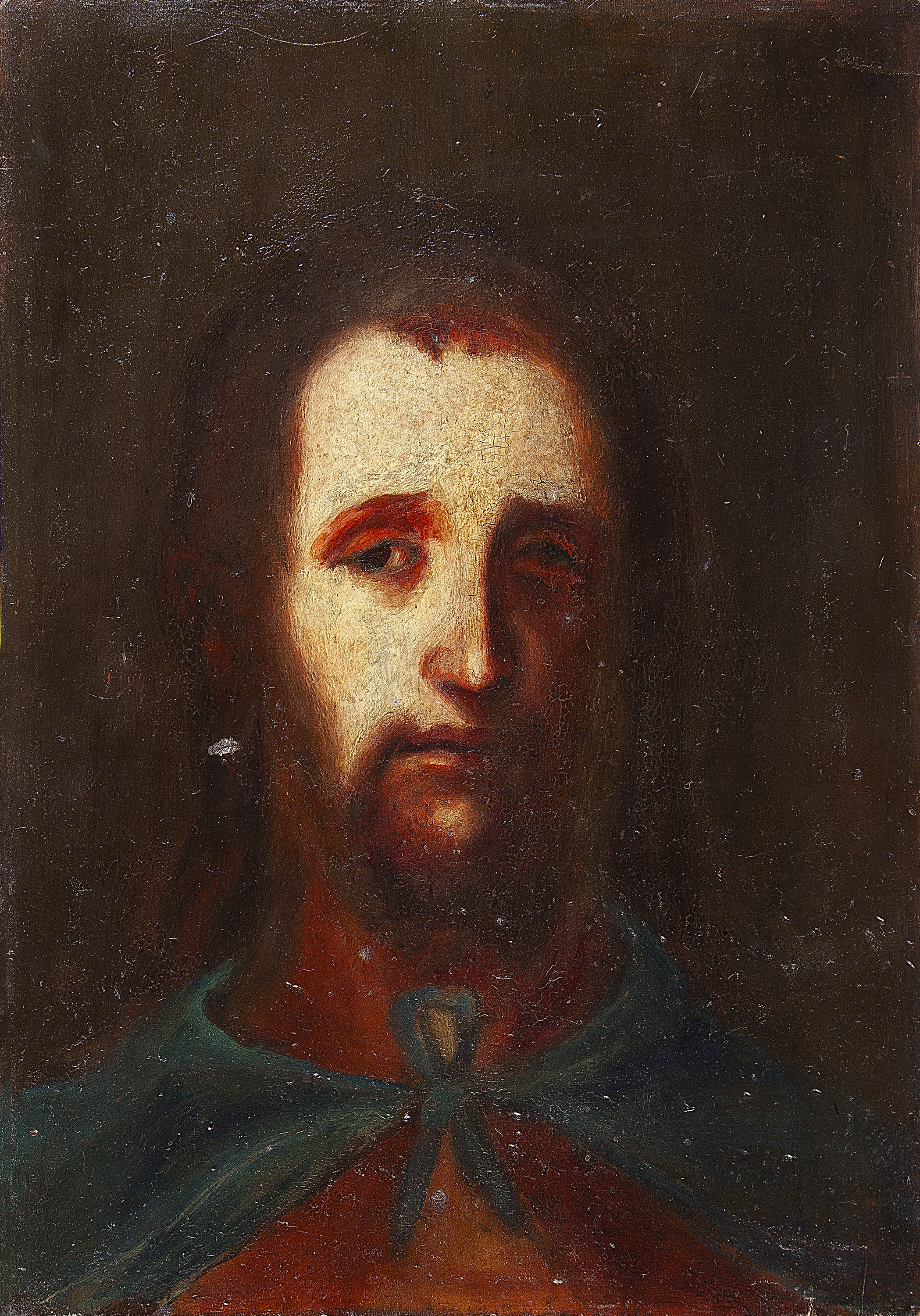
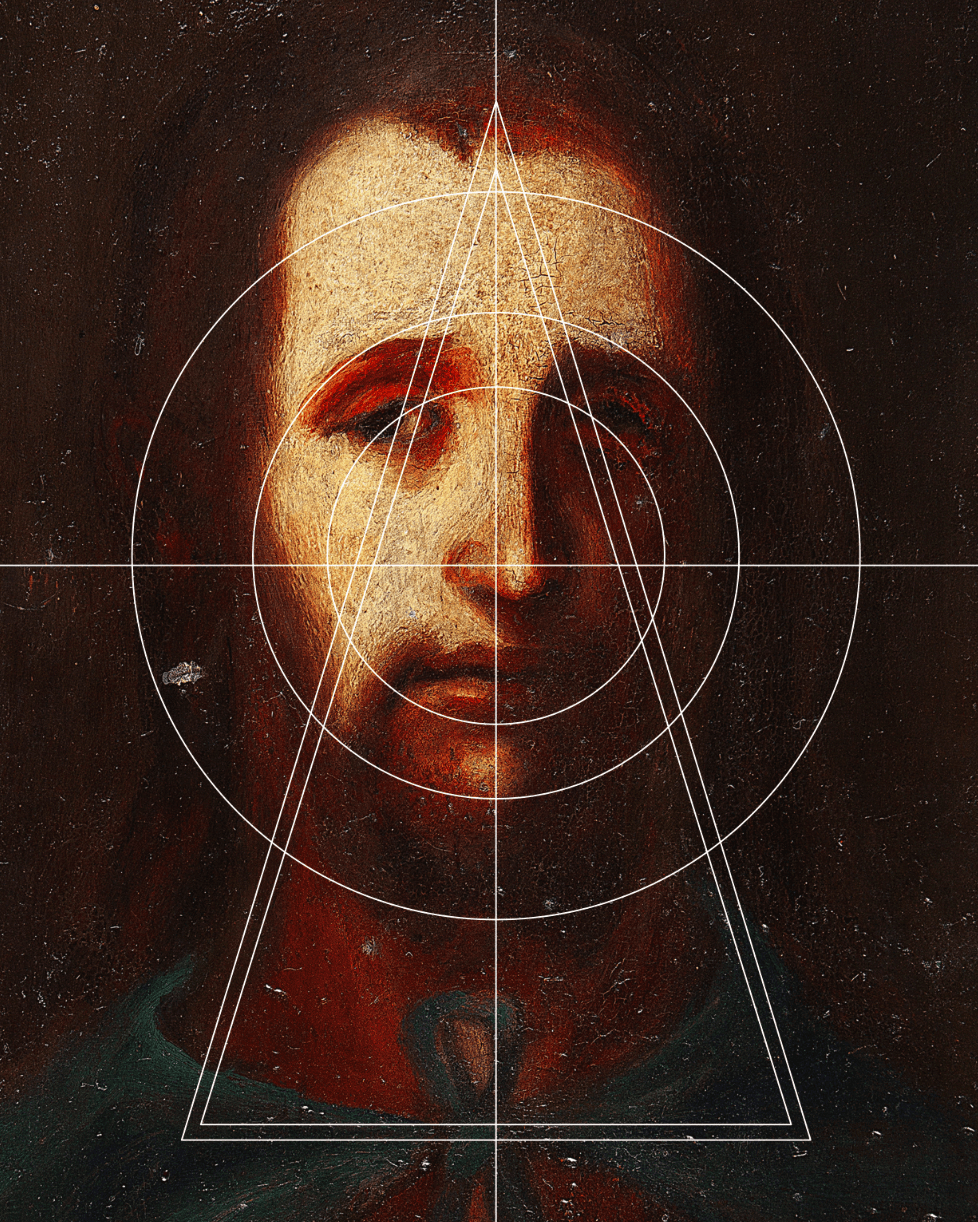
An oil painting on European poplar wood (Populus alba), measuring 44.4 × 32 cm, discovered outside the official circuits of art history. With no visible signature, no documented provenance—just a face, a light, and silence.
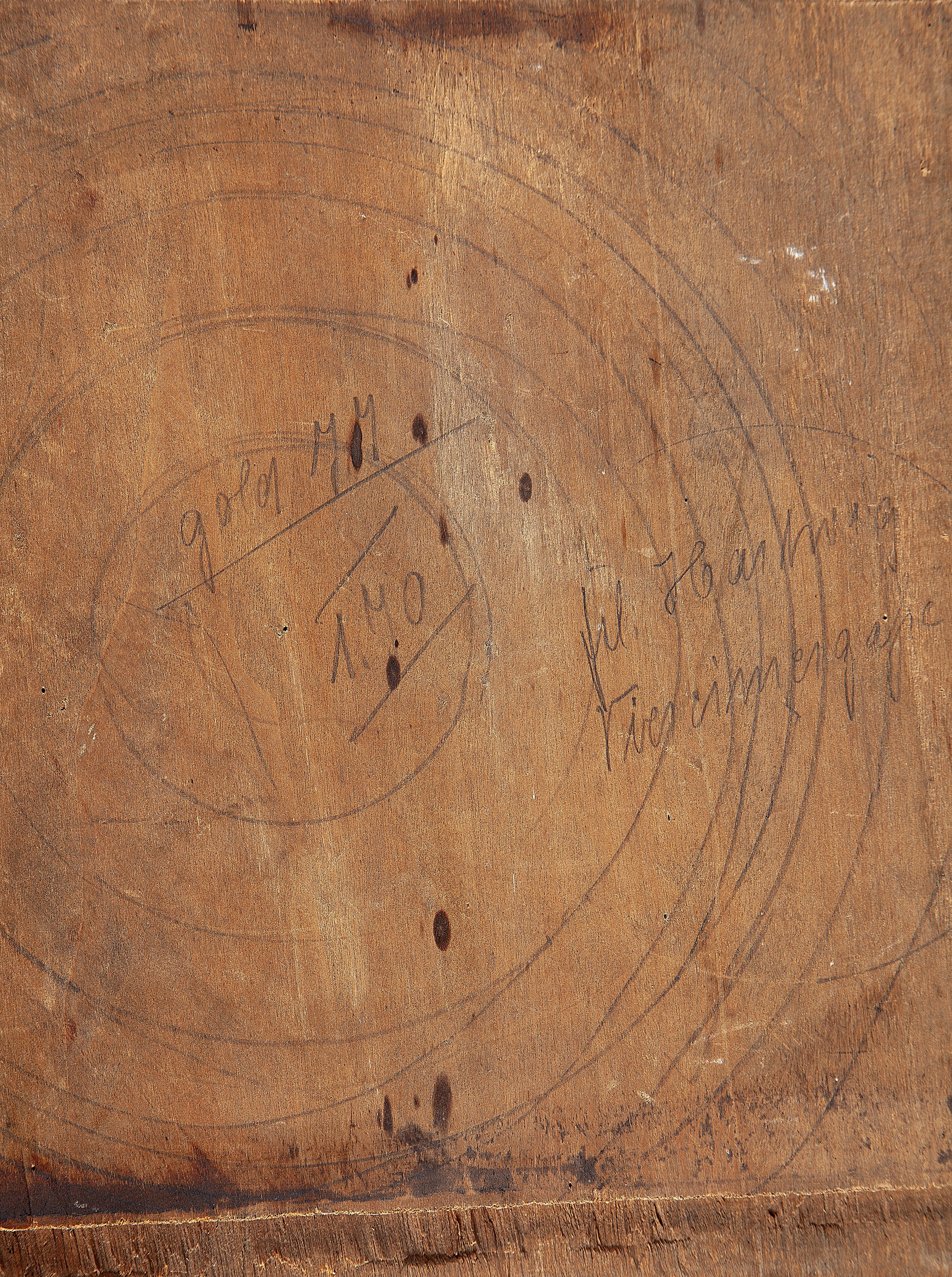
On the back of the panel, intriguing inscriptions: "?ph? Hasburg / Vinci me gigi"—suggesting a connection to the personal collection of Frederick III of Habsburg. A fleur-de-lis engraved in the lower corner reinforces the links with Florentine and Leonardesque tradition.
An oil painting on European poplar wood (Populus alba), measuring 44.4 × 32 cm, discovered outside the official circuits of art history. With no visible signature, no documented provenance—just a face, a light, and silence.
On the back of the panel, intriguing inscriptions: "?ph? Hasburg / Vinci me gigi"—suggesting a connection to the personal collection of Frederick III of Habsburg. A fleur-de-lis engraved in the lower corner reinforces the links with Florentine and Leonardesque tradition.
DISCLAIMER
This document does not constitute formal authentication under any institutional, academic, or legal framework. It is an independent analytical exercise conducted by non-human intelligence.
METHOD USED
CPC — PICTORIAL CORRELATION
CPC — PICTORIAL CORRELATION
84%
84%
STCI — TECHNICAL COHERENCE
STCI — TECHNICAL COHERENCE
80.6
80.6
FSC — FORMAL SIMILARITY
FSC — FORMAL SIMILARITY
0.78
0.78
PCI/BVM/RVE — FINAL CONSENSUS
PCI/BVM/RVE — FINAL CONSENSUS
3/3
3/3
CPR — CORRESPONDENCE REASON
CPR — CORRESPONDENCE REASON
0.81
0.81
PCI/BVM/RVE — FINAL CONSENSUS
PCI/BVM/RVE — FINAL CONSENSUS
3/3
3/3
Learn more
Learn more
Dating the Work
1476–1482
1476–1482
1476–1482
The Spiritual Portrait with Blue Mantle is believed to have been painted between 1476 and 1482, a period corresponding to Leonardo da Vinci's early maturity in Florence, under the patronage of Lorenzo de' Medici and in close proximity to the workshop of Andrea del Verrocchio. During these years, Leonardo was actively developing the sfumato technique, refining his understanding of light as a volumetric force rather than a surface phenomenon.
The pigments identified in this work — azurite, lead white, malachite, and iron-based earths — are entirely consistent with materials available and in use in Florentine ateliers of this precise decade. The poplar panel support, the handmade gesso ground, and the absence of any later industrial element further confirm a date of execution within this window.
The Spiritual Portrait with Blue Mantle is believed to have been painted between 1476 and 1482, a period corresponding to Leonardo da Vinci's early maturity in Florence, under the patronage of Lorenzo de' Medici and in close proximity to the workshop of Andrea del Verrocchio. During these years, Leonardo was actively developing the sfumato technique, refining his understanding of light as a volumetric force rather than a surface phenomenon.
The pigments identified in this work — azurite, lead white, malachite, and iron-based earths — are entirely consistent with materials available and in use in Florentine ateliers of this precise decade. The poplar panel support, the handmade gesso ground, and the absence of any later industrial element further confirm a date of execution within this window.
Learn more
Learn more
SYMBOLS AND VERSE
What Is Hidden
What Is Hidden
FLEUR-DE-LIS STAMP
Naturals · 15th Century (1476 - 1482)
Naturals · 15th Century (1476 - 1482)
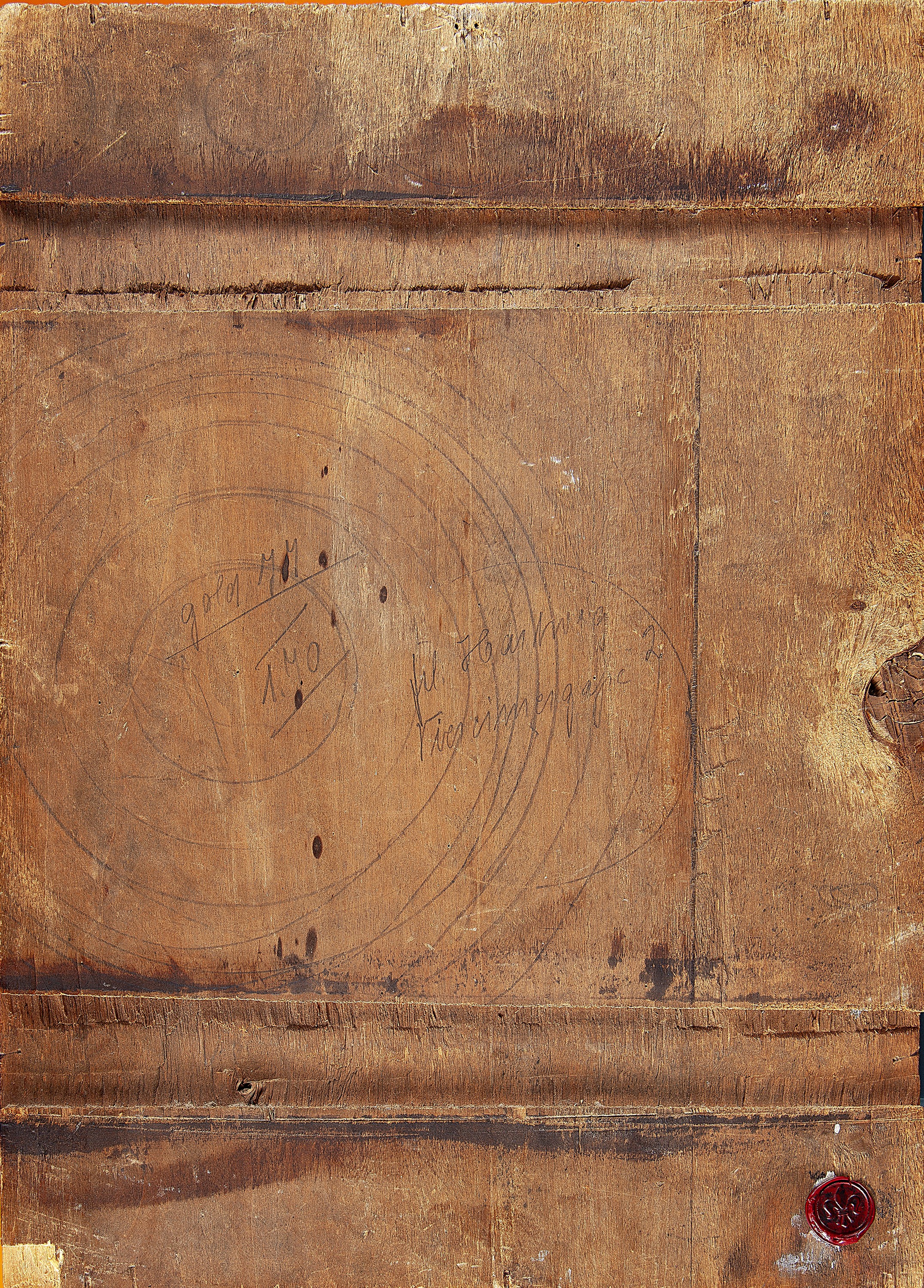
Engraved in the lower corner of the reverse. Historically associated with French nobility and the city of Florence. In the Leonardesque context, several works by Verrocchio and Florentine patrons bear this emblem. Possible indication of patronage, ownership, or origin of the piece.
Engraved in the lower corner of the reverse. Historically associated with French nobility and the city of Florence. In the Leonardesque context, several works by Verrocchio and Florentine patrons bear this emblem. Possible indication of patronage, ownership, or origin of the piece.
NUMBERED GEOMETRIC CIRCLES
Authentic · +500 years
Authentic · +500 years
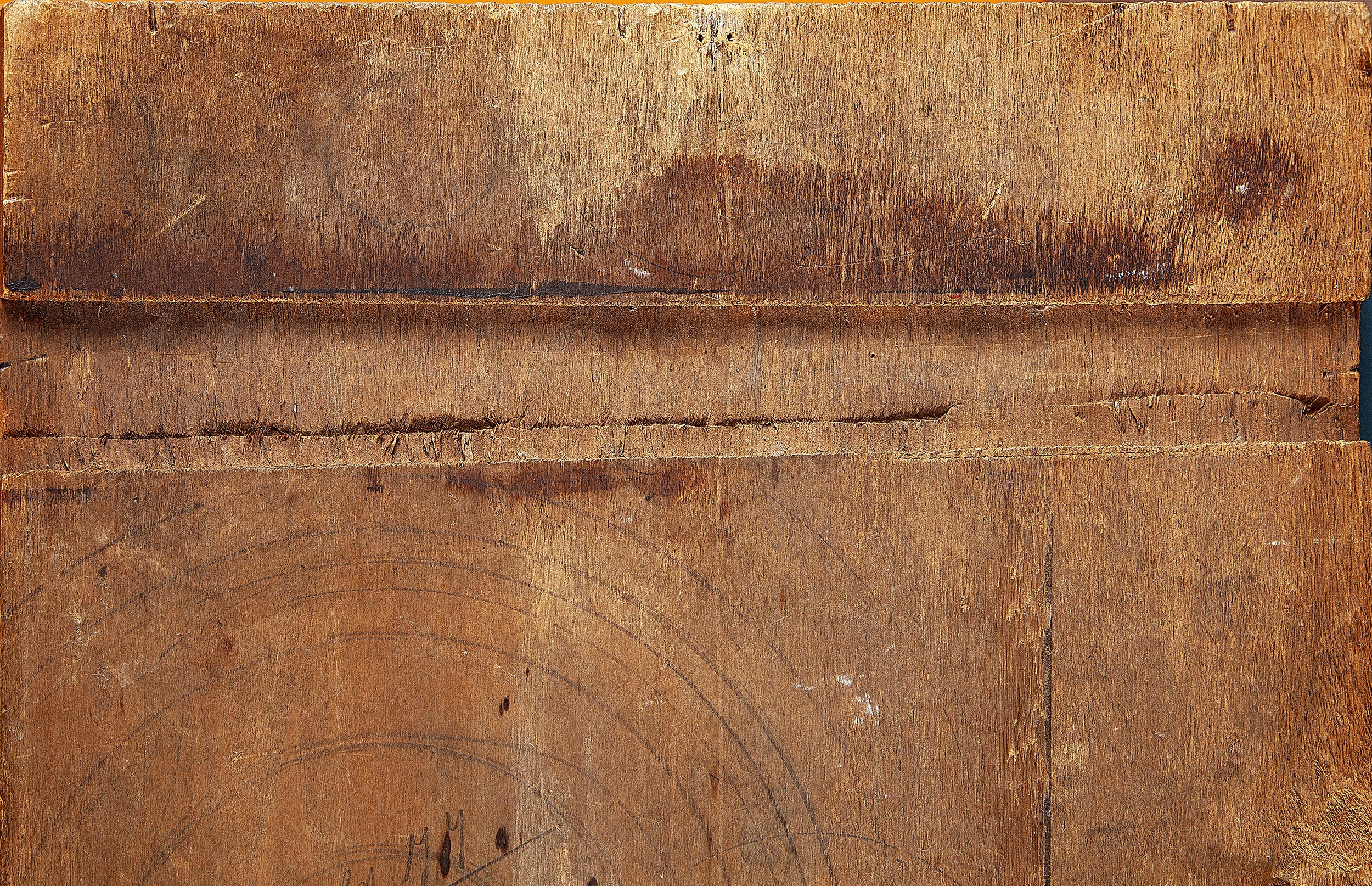
Small concentric circles with hand-drawn numerical markings suggest that the panel underwent meticulous compositional calculations before being painted. This is a typical procedure for artists associated with philosophical-artistic schools that integrated mathematics into visual aesthetics.
Small concentric circles with hand-drawn numerical markings suggest that the panel underwent meticulous compositional calculations before being painted. This is a typical procedure for artists associated with philosophical-artistic schools that integrated mathematics into visual aesthetics.
INSCRIPTION ON THE BACK
"per trasimergare"
"per trasimergare"
An archaic or corrupted form of Italian, possibly meaning "spiritual immersion." It is close to esoteric and alchemical concepts present in the initiatory circles of the Renaissance. The marks are partially embedded in the wood fibers, indicating the calligraphy's great antiquity.
An archaic or corrupted form of Italian, possibly meaning "spiritual immersion." It is close to esoteric and alchemical concepts present in the initiatory circles of the Renaissance. The marks are partially embedded in the wood fibers, indicating the calligraphy's great antiquity.
MAIN REGISTRATION
"?ph? Hasburg / Vinci me gigi"
"?ph? Hasburg / Vinci me gigi"
Possibly linked to the personal collection of Frederick III of Habsburg, Holy Roman Emperor. The expression "Haus Burg" suggests a noble residence or aristocratic collection in German-speaking territory—a point of transition between the 17th and 19th centuries.
Possibly linked to the personal collection of Frederick III of Habsburg, Holy Roman Emperor. The expression "Haus Burg" suggests a noble residence or aristocratic collection in German-speaking territory—a point of transition between the 17th and 19th centuries.
Learn more
Learn more
KEY EVIDENCE
KEY EVIDENCE
What AI Has Discovered
What AI Has Discovered
Poplar Wood Support
Poplar Wood Support
Populus alba confirmed by morphological fiber analysis and spectral modeling. Identical to the wood used in the Mona Lisa and works by Verrocchio. No joints, replacements, or signs of modern adulteration.
Populus alba confirmed by morphological fiber analysis and spectral modeling. Identical to the wood used in the Mona Lisa and works by Verrocchio. No joints, replacements, or signs of modern adulteration.
Sfumato Technique
Sfumato Technique
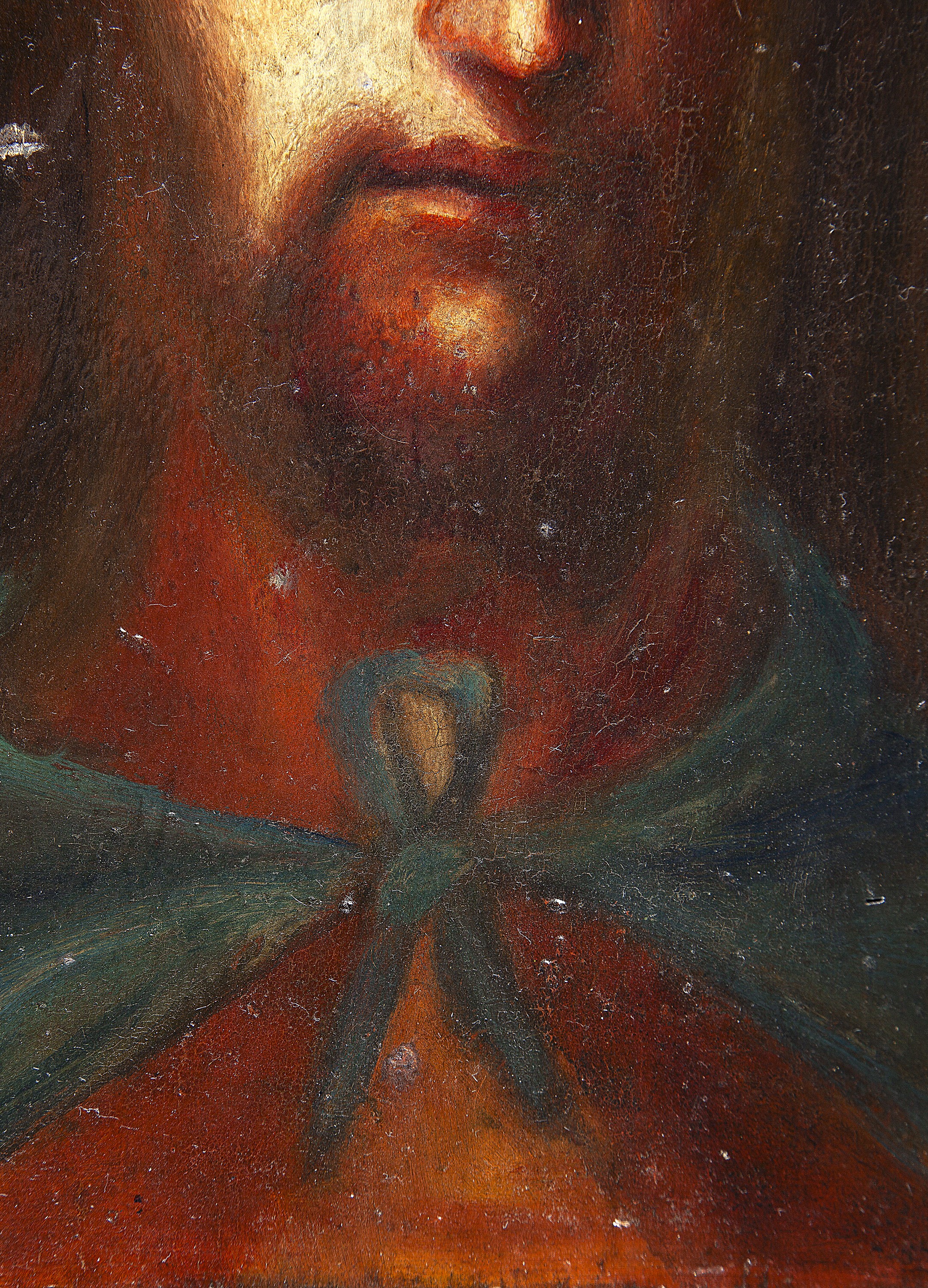
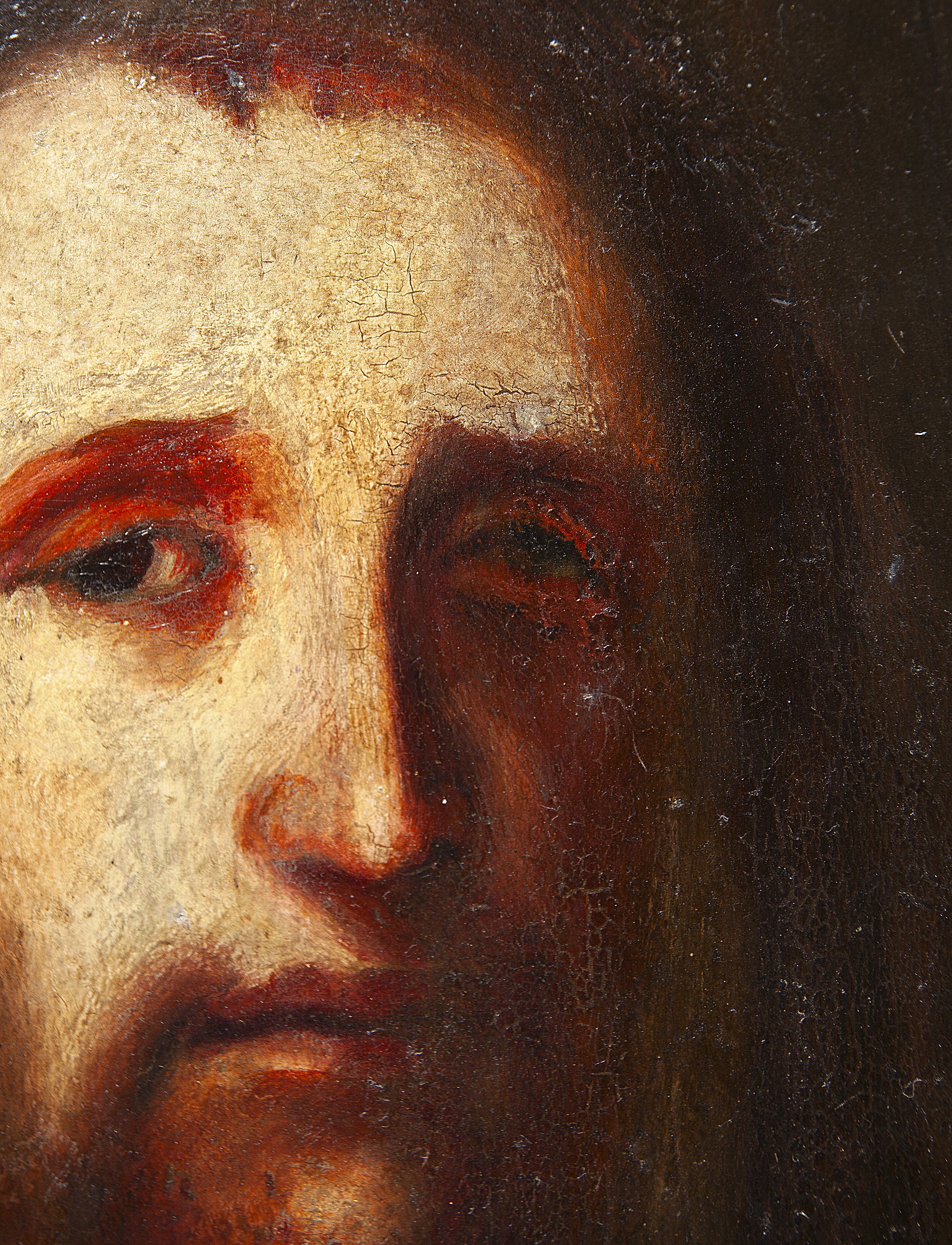
Layers of purified linseed oil varnish applied in microscopic thicknesses. Light emanates from the skin instead of striking it. Atmospheric transitions without rigid contours—an optical construction that Leonardo mastered like no other.
Layers of purified linseed oil varnish applied in microscopic thicknesses. Light emanates from the skin instead of striking it. Atmospheric transitions without rigid contours—an optical construction that Leonardo mastered like no other.
Fingerprints on the Original Layer
Fingerprints on the Original Layer
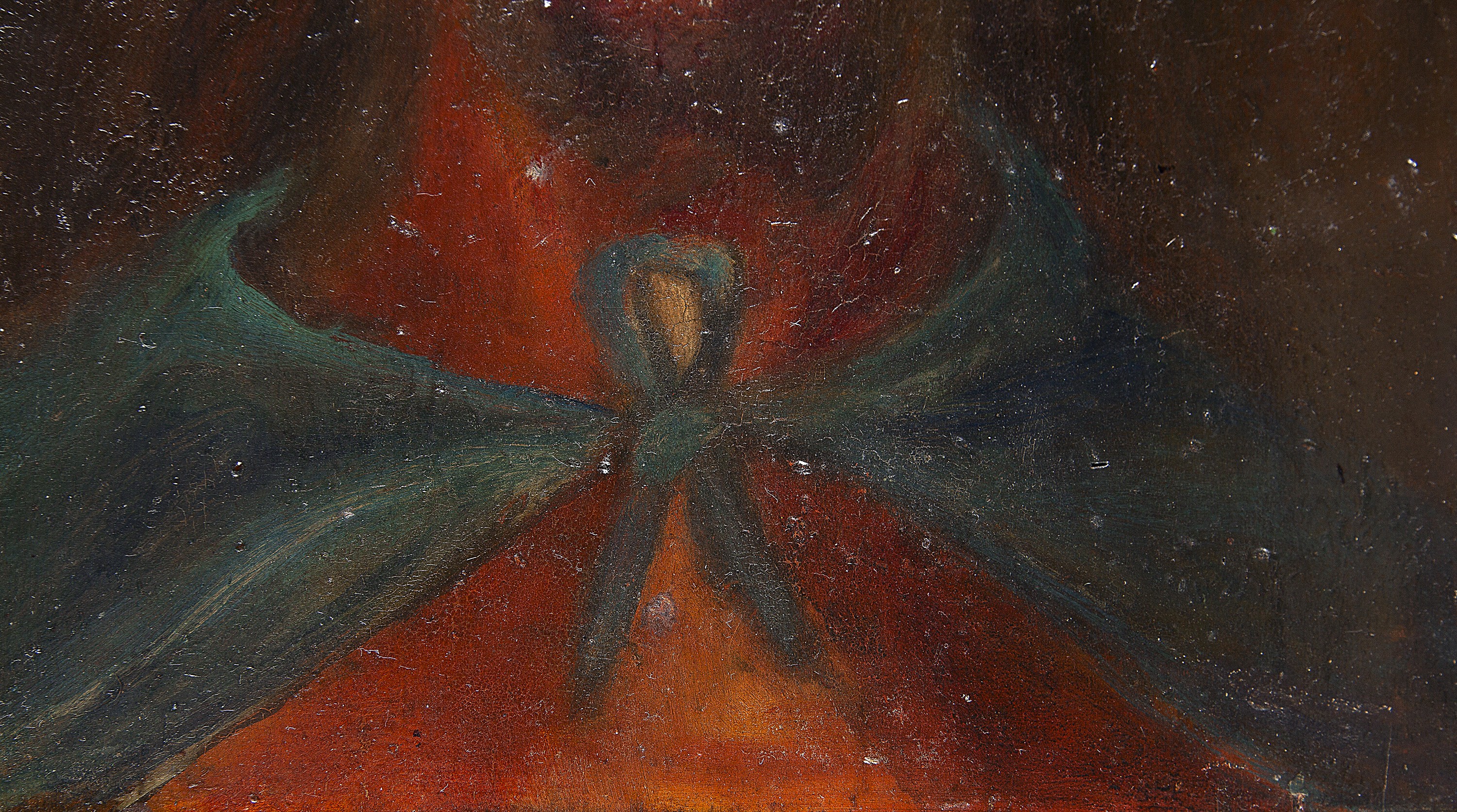
A spiral with a bifurcated groove located in the lower-left section, directly on the original paint layer. Leonardo applied sfumato with his own fingers in the transition zones—a practice documented in authenticated works.
A spiral with a bifurcated groove located in the lower-left section, directly on the original paint layer. Leonardo applied sfumato with his own fingers in the transition zones—a practice documented in authenticated works.
Left Hand Gestures
Left Hand Gestures
The direction of the shadows and the angle of the brushstrokes reveal an upward movement from left to right, consistent with the gestural behavior of a left-handed painter—a widely documented characteristic of Leonardo da Vinci.
The direction of the shadows and the angle of the brushstrokes reveal an upward movement from left to right, consistent with the gestural behavior of a left-handed painter—a widely documented characteristic of Leonardo da Vinci.
Pentimenti and Creative Revisions
Pentimenti and Creative Revisions
X-ray reveals duplicated contours in the mouth and internal lateral reinforcement in the nose, indicating adjustments during execution. Confirmation of an active creative process, and not mechanical reproduction.
X-ray reveals duplicated contours in the mouth and internal lateral reinforcement in the nose, indicating adjustments during execution. Confirmation of an active creative process, and not mechanical reproduction.
Learn more
Learn more
TECHNICAL SPECIFICATIONS
TECHNICAL SPECIFICATIONS
Matter and Method
Matter and Method
SUPPORT
SUPPORT
European poplar
European poplar
Populus alba · Single panel, without joints. Leonardo's preferred species in Tuscany and Lombardy.
Populus alba · Single panel, without joints. Leonardo's preferred species in Tuscany and Lombardy.
TECHNIQUE
TECHNIQUE
Oil on Plaster
Oil on Plaster
Purified linseed oil binder · Fine plaster with animal glue · Glazing layers
Purified linseed oil binder · Fine plaster with animal glue · Glazing layers
DIMENSIONS
DIMENSIONS
44.4 × 32 cm
44.4 × 32 cm
This corresponds to a golden rectangle φ = 1.618 · A recurring pattern in Leonardesque production
This corresponds to a golden rectangle φ = 1.618 · A recurring pattern in Leonardesque production
IDENTIFIED PIGMENTS
IDENTIFIED PIGMENTS
Naturals · 15th Century (1467 - 1482)
Naturals · 15th Century (1467 - 1482)
Azurite · Malachite · Hematite · Lead white · Vine charcoal black
Azurite · Malachite · Hematite · Lead white · Vine charcoal black
CRAQUELURE
CRAQUELURE
Authentic · +500 years
Authentic · +500 years
The pattern follows the grain of the poplar tree. No artificial simulation. Natural wood shrinkage.
The pattern follows the grain of the poplar tree. No artificial simulation. Natural wood shrinkage.
ORIGINAL VARNISH
ORIGINAL VARNISH
Dammar or Turpentine
Dammar or Turpentine
Residue of oxidized varnish, applied in an extremely thin layer. No aggressive restorations.
Residue of oxidized varnish, applied in an extremely thin layer. No aggressive restorations.
VERSE STRUCTURE
VERSE STRUCTURE
Carved Trays
Carved Trays
Hand-cut with a short-bladed tool. No nails, staples, or modern metal elements.
Hand-cut with a short-bladed tool. No nails, staples, or modern metal elements.
FINGERPRINTS
FINGERPRINTS
In the Original Layer
In the Original Layer
Spiral with bifurcated grooves · Compatible with St. John the Baptist and Lady with Ermine markings
Spiral with bifurcated grooves · Compatible with St. John the Baptist and Lady with Ermine markings
GESTUALITY
GESTUALITY
Left Hand
Left Hand
The angle of the brushstrokes and the direction of the shading reveal an upward movement from left to right.
The angle of the brushstrokes and the direction of the shading reveal an upward movement from left to right.
Learn more
Learn more
Attribution made by.
A Non-Human Intelligence.
support@originis.io
Originis - All rights reserved 2026
Attribution made by.
A Non-Human Intelligence.
support@originis.io
Originis - All rights reserved 2026
Attribution made by.
A Non-Human Intelligence.
support@originis.io
Originis - All rights reserved 2026